Create Your First Project
Start adding your projects to your portfolio. Click on "Manage Projects" to get started


Studio of Sir Anthony Van Dyck (1599-1641), The Jermyn Portrait of Queen Henrietta Maria
Studio of Sir Anthony Van Dyck
The Jermyn Portrait of Queen Henrietta Maria
oil on canvas
50 x 40 in.; 128 x 103 cm.
Provenance
Henry Jermyn (1605-1684), Earl of St Albans;
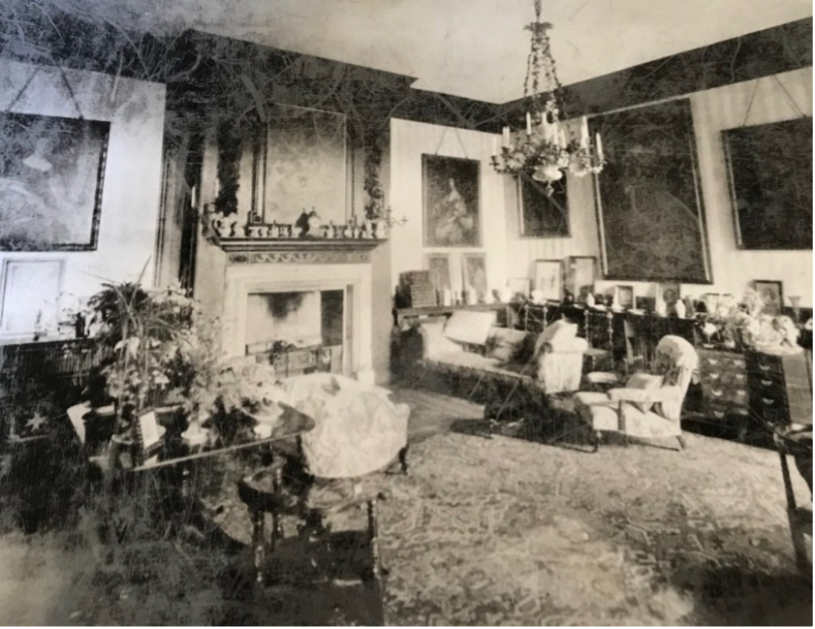
Thence by descent with the Jermyn family at Rushbrooke Hall, Suffolk;
Their sale, ('Rushbrooke Hall near Bury St. Edmunds'), on the premises, Knight, Frank & Rutley, 10-11 December 1919, lot 68 (as 'Van Dyck');
Where purchased by a member of the Jermyn family;
By descent in the family until sold anonymously, Ely, Rowley's, 22 July 2010, lot 345 (as Studio of Van Dyck);
Where purchased by Private Collection, Guernsey;
Until acquired privately therefrom by Whiteman's Fine Art, 2025.
Literature
E. Farrer, Portraits in Suffolk Houses (West), London 1908, p. 295, no. 21 (as Sir Anthony Van Dyck);
O. Millar in Van Dyck, a Complete Catalogue of the Paintings, S. Barnes, N. de Poorter, O. Millar, and H. Vey (eds), New Haven and London 2004, p. 635, ('A copy [of IV.A19] was formerly at Rushbrooke Hall.');
A. Adolf, The King's Henchman: Henry Jermyn, Stuart Spymaster, London 2012, p. 38, reproduced (as Van Dyck and Workshop).
Note
This portrait of Queen Henrietta Maria (1609-1669), daughter of Henry IV of France and wife of the connoisseur and collector King Charles I, is important due to its complete provenance which stretches back into the 17th century. More specifically, this painting was owned by Henry Jermyn, later Earl of St Albans (1605-1684), of Rushbrooke Hall, Suffolk, who was perhaps the most singular figure to the Queen outside of the Royal Family. He was a trusted confidante and member of Her Majesty’s Household, including holder of the posts of Gentleman Usher, Treasurer and Privy Councillor. Unlike the majority of Van Dyck’s studio productions of this popular composition, which have nearly all lost their early provenances, within this artwork lies a fascinating story between Queen and her most loyal servant and friend.
The Queen
Queen Henrietta Maria remains one of the most intriguing and influential consorts in early modern Britain. Born in the Louvre Palace in Paris in November 1609, the daughter of Henry IV and Maria de' Medici, her and her siblings’ illustrious heritage destined greatness. After the assassination of her father in 1610, when the young princess was a mere one year of age, much of her upbringing took place in the palace of St Germain. Tutored in riding, dancing, and singing, the more sprightly aspects of her youth were tempered by her devout Catholic education undertaken by Carmelites which she maintained throughout her life. With her sister Elizabeth married off into the Spanish royal family, Henrietta’s match to Charles, Prince of Wales, in 1624 was unprecedented for a Catholic princess entering into a Protestant court. Her marriage treaty, which Pope Urban VIII interceded in, included vast protections for her and her children’s rights to practise their Catholic faith in a reformed nation. Married with the Duke of Buckingham acting as proxy in May 1625, the eventual arrival of the 16-year-old French princess would leave a mark of the politics of the country for decades to come. Viewed with ever greater suspicion, due to her French entourage and resistance to participating in courtly rituals presided over by protestant prelates, initial tensions eventually subsided especially after the death of King’s favourite Buckingham in 1628.
The Queen’s highly developed individual taste for the arts, which began to flourish in the late 1620s, remained a constant throughout her reign. She bestowed her patronage on the Caravaggist Orazio Gentileschi and others, who visited the island and painted key works for her residences (which numbered no fewer than six palaces) designed in-part by architect Inigo Jones. This is not to mention the design and execution of her private Chapel, a rare 17th century survival found in the St James’ Palace complex today, which was presided over by her own Catholic priests and musicians.
This portrait derives from a composition that was initiated by Sir Anthony Van Dyck in circa 1636. Van Dyck, who was appointed ‘Principalle Paynter in Ordinary’ to King Charles I in 1632, came to dominate and raise the Royal image to a height that would have an afterlife of centuries after his eventual death in 1641. The original of the Queen, often referred to in contemporary documents as ‘Une Reyne vestu en blu’, is believed to be lost. It’s popularity however is attested to the survival of numerous studio versions, including this one created for Henry Jermyn (to be expanded on below). Documents from the period survive attesting to copies of the ‘Queen’s picture in blue’ being given by the King to the Lord Chamberlin [Philip Herbert, 4th Earl of Pembroke] in an exchange, alongside mentions in the King’s own letters regarding a version of ‘My Wives Picture in blew, sitting in a Chair’ which had hung in Hampton Court Palace. The best surviving versions are found in the Duke of Northumberland’s collection at Syon House and formerly at Ingateston Hall and in the Fitzwilliam collection at Wentworth Woodhouse.
The most interesting and compelling detail of this painting’s history is the remains of a cipher which was revealed when the painting was conserved by the present owner. Stamped onto the reverse of the original unlined canvas is the remains of a ‘CP’ or ‘CR’. Although various theories have been tested, including that it may be an abbreviation for ‘Carolus rex’ [King Charles] or ‘Carolus princeps’ [Prince Charles], its visual difference to other surviving royal ciphers from the period impedes a full explanation. As such a trusted member of the Stuart court, it is entirely possible that a Workshop painting by Van Dyck may have been gifted to Jermyn directly from the Royal Collection.
Henry Jermyn, The Owner
This painting’s owner was Henry Jermyn, who was created Earl of St Albans 1659 after serving Queen Henrietta Maria loyally since their meeting in France in 1624-25 as part of her marriage negotiations. Apart from the Queen’s husband and children, there was perhaps no singular figure that remained as steadfast to her concerns than Jermyn. Born the son of the Suffolk politician Sir Thomas Jermyn (1573-1644/5), Henry’s career followed in the footsteps of his courtier father. His aptitude for languages secured several adventures in his youth, including accompanying Lord Bristol’s embassy to Madrid in 1622-3 and eventually Lord Kensington’s mission to Paris where he met the future Charles I’s bride. Jermyn became gentleman usher to the Queen in 1627 and was eventually banished for a small period by the King for refusing to marry Eleanor Villiers, a maid of honour and niece of the Duke of Buckingham. Through Henrietta Maria’s efforts he returned to court in February 1636, the very year the composition for the portrait in question is said to have been devised. During the 1630s his proximity to the Queen became the subject of court gossip with poet William Davenant having even depicted the pair as lovers in his written works. This was fuelled even more so by his appointment as Master of the Horse to the Queen in 1639.
After being discovered as part of a Royalist plot in 1641, in an attempt to bring loyalist armies from the north, Jermyn fled to France and soon after rejoining the Queen in the Hague the following year where he assisted her in pawning jewels and raising loans for the oncoming Civil Wars. After distinguishing himself on the battlefield during several military engagements, the Queen and Jermyn eventually fled from Oxford in 1644 to live out the rest of the war at the Louvre and St Germain-en-Laye. It was Jermyn’s task to inform the Queen of her husband Charles I’s execution in 1649. He remained the monarchy in exile’s staunchest supporters and was created a privy councillor to Charles II in 1652. In December 1662 Samuel Pepys had written in his diary that a marriage had taken place ‘for certain’ and that ‘her being married to my lord of St. Albans is commonly talked of’. Later seventeenth century sources also continued this story, including that Jermyn’s friend the poet Abraham Cowley had been present at their matrimonial union. Others, including the Anglican Windsor clergyman Nathaniel Angelo, had gone so far as to claim the parentage of the Royal Children belonging to Jerymn and not the King. Although rumours of a secret marriage appear to have been unfounded, his keeping of the Queen’s most intimate confidences (including the conversion of her son Prince Henry to Catholicism in 1654) has ever since provided writers and historians with great intrigue.
At the Restoration of the Monarchy in 1660 Jermyn was created ambassador to France, where he presided over key marriage treaties including those of Princess Henriette Anne and Philippe, Duke of Orléans. His influence in London during this period is most felt with his development of his lands in St James’s, including Jermyn Street his centre piece of St James’s Square, modelled on the ideals of Inigo Jones. His commissioning of Christopher Wren in 1665 to design St James’s Church too ranks amongst his lasting achievements in this historic part of London. A plaque dedicated to his memory at 10 St James’s Square, the site of his former London home, describes him as the ‘founder of the West End’.
Jermyn was present at the Queen’s death at the Chateau of Colombes in August 1669, ending his 45-year personal service to the monarch. His status at the court of Charles II continued, as he served as Lord Chamberlain to the King between 1672–4 and was invested as a knight of the Garter on 30 June 1672. His last years were spent both crippled and blind in retirement at Rushbrooke before his death in 1684. He died unmarried and his mortal remains were laid to rest in Rushbrooke Church.
The significance of this portrait, connecting Jermyn to his Queen, is perhaps one of the most compelling survivals from the period in public hands. The painting remained at the family seat at Rushbrooke Hall until 1919 where it was acquired by another Jermyn family member with whom it descended until 2010 (see Provenance). It’s significance was further recognised when it appeared on the front cover of the second edition of Anthony Adolph’s 2012 biography of Jermyn, which has done much to bring to light the life and career of this previously neglected figure in the Stuart court.
The painting’s frame, which may date to the later seventeenth century or perhaps early 18th century, appears to be associated with a later campaign of reframing undertaken on the artworks at Rushbrooke Hall. Notably, an Equestrian Portrait of King Charles I in the very same style frame, which too was sold from the hall in 1919, is now on display at Christchurch Mansion from the collection of Ipswich Council.
We are grateful to Malcolm Rogers CBE for confirming the attribution to Van Dyck’s studio on the basis of photographs.